Skip to content
Free written estimatesLocal crews
Call now (405) 555-0101
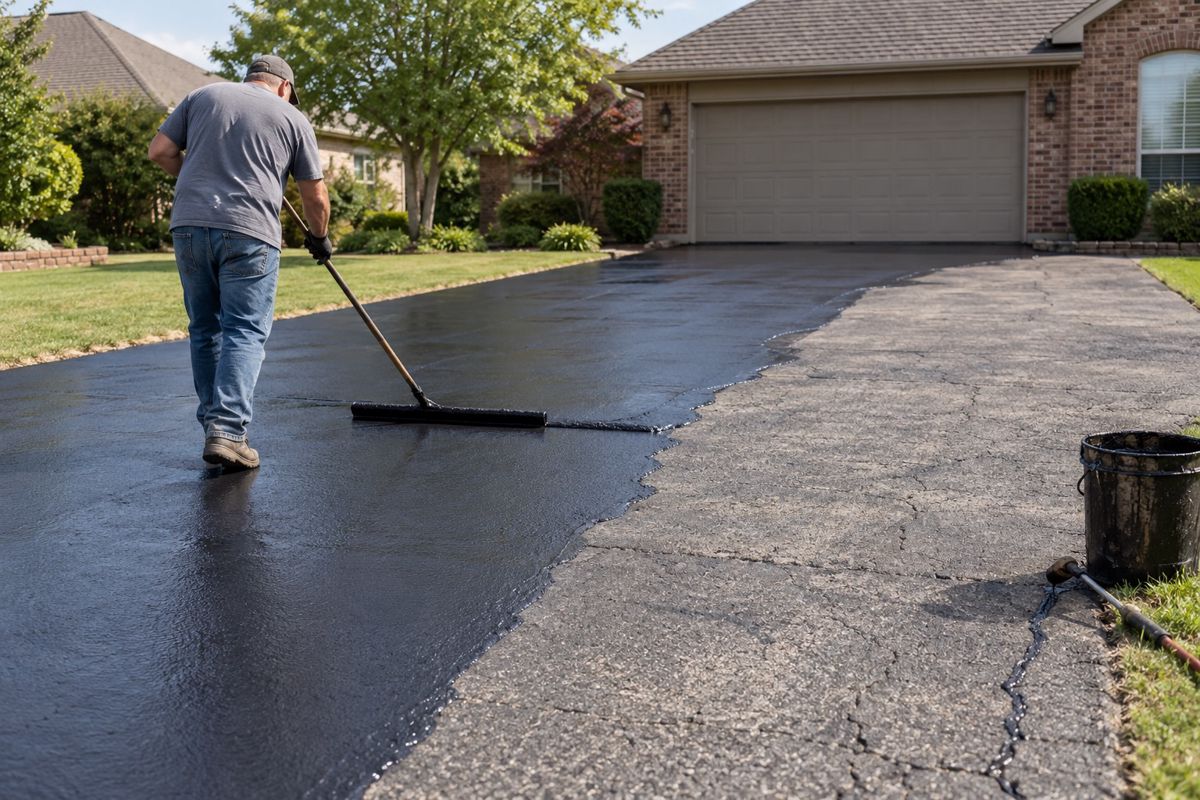
Worker squeegeeing black sealcoat across a faded gray driveway

Sealcoating in Oklahoma City, OK

Asphalt sealcoating in Oklahoma City to slow down wear

Crack filling and sealcoat for driveways and parking lots that are still sound. We tell you when it is too late for a seal.

  • Crack filling before sealing
  • Driveways and parking lots
  • Honest advice on when to skip it

Step 1 of 3

What do you need?

What is asphalt sealcoating and what does it do?

Sealcoating is a thin protective coating brushed or sprayed over the surface of sound asphalt. It slows the damage caused by sun, rain, oil, fuel and winter road treatments. Asphalt is made of stone and a sticky binder, and the binder wears away with age. Sealcoat replaces some of that protection and gives the pavement a fresh, dark finish.

It is maintenance, not repair. It will not fix a broken base, deep cracks or potholes. Asphalt sealcoating in Oklahoma City works best on pavement that is still in fair shape, which is why it is often done on newer driveways and lots. When damage is already deep, a patch or a rebuild is a better use of money.

How does crack filling work, and why is it done before sealing?

Cracks let water reach the base. In Oklahoma City winters that water freezes, expands and widens the crack. In summer the clay under the pavement moves and the cracks grow. Crack filling stops that cycle.

The crew cleans out debris and loose material, then fills the crack with a rubberized filler that stays flexible as the pavement moves.

  • Narrow cracks are filled and leveled.
  • Wide or branching cracks may need a different repair.
  • Filling happens before sealcoat so water cannot sit in open cracks under the coating.

Sealing over open cracks wastes the coating, because moisture still gets under it and the damage keeps spreading.

How often should you sealcoat, and what weather is right?

Many contractors suggest sealing every two to three years, but conditions matter. Heavy traffic, full sun and cracks that keep returning can mean a shorter wait. New asphalt should cure first, typically six months to a year, before it gets its first coat. If your driveway is brand new, see our driveway paving page for how that process works.

Sealcoat needs dry pavement, air temperatures above about 50 degrees and rising, and no rain for at least 24 hours. Spring and fall are the good windows in Oklahoma City. In midsummer the pavement can be too hot to coat evenly, and in winter the coating will not cure. Spring storms mean we watch the forecast closely before we book a day.

We price after seeing the pavement. These things matter most:

  • Total area to be coated.
  • Number and width of cracks to fill.
  • Oil and fuel spots that need cleaning and primer.
  • Number of coats and the product used.
  • Surface condition and any small repairs needed first.
  • Traffic control, edging and striping afterward.

The coating goes on in a day for most driveways and many lots. Then it has to dry. Plan on keeping cars off for at least 24 to 48 hours, longer if the weather is cool or humid. Large lots are done in sections so you can keep part of the property open. We tell you when it is safe to drive again.

What should I expect on the day, and when should I call?

On the day, the crew sweeps and blows off the surface, fills cracks, cleans and primes oil spots, then applies the coating with squeegees or a sprayer. Barriers and cones keep traffic off. You will smell it, and it will look wet and black until it dries. Keep sprinklers off and pets and children away.

Call when the surface looks gray and dry, when small cracks appear, when oil stains build up or when water no longer beads on the pavement. If the pavement already has potholes and spreading cracks, call anyway and we will tell you whether a seal helps. On commercial lots, fresh line striping is a good follow-up. Head back to our home page for all of our paving services.

Free written estimates
Local crews
Clear timelines
Site cleanup included

How it works

  1. Tell us about the surface

    Size, condition and goals.

  2. Site visit and quote

    We measure and price it in writing.

  3. Prep and paving

    Base, drainage and surface done in the right order.

Request sealcoating

Tell us what you need and we call you back.

No obligation.

Step 1 of 3

What do you need?

Questions about paving in Oklahoma City

Can you sealcoat a new driveway right away?

No. New asphalt needs time to cure and release its oils, usually six months to a year. Sealing too soon can leave a soft, tacky surface that scuffs. We can tell you when your driveway is ready, based on when it was laid and the weather since then.

Does sealcoating fix cracks and potholes?

No. Sealcoat is a thin layer that protects the surface. Cracks are filled first, and potholes need patching. Sealing over open damage does not last. We handle crack filling and patching in the same visit when the pavement needs it, so you do not have to hire two crews.

How long before I can drive on sealcoated pavement?

Most pavement needs 24 to 48 hours to dry before cars use it, and longer in cool or damp weather. Heavy vehicles should wait longer. We put barriers up and tell you the time for your job. Driving or walking on it too soon leaves tracks.

Is sealcoating worth it for an old, worn driveway?

It depends on the condition. If the surface is dry and faded but the base is sound, a seal can still slow further wear. If it is crumbling, rutted or heaved, sealing will not help. We tell you honestly, even when the answer is to wait or replace.

Will sealcoat make my driveway slippery or hot?

Fresh sealcoat can be slick when wet until it cures, and dark pavement gets hot in direct summer sun. Some crews add sand for grip. Ask about this when you get the quote, especially for sloped driveways or lots with a lot of foot traffic.

Ready when you are

Call now or request a quote online.

(405) 555-0101