
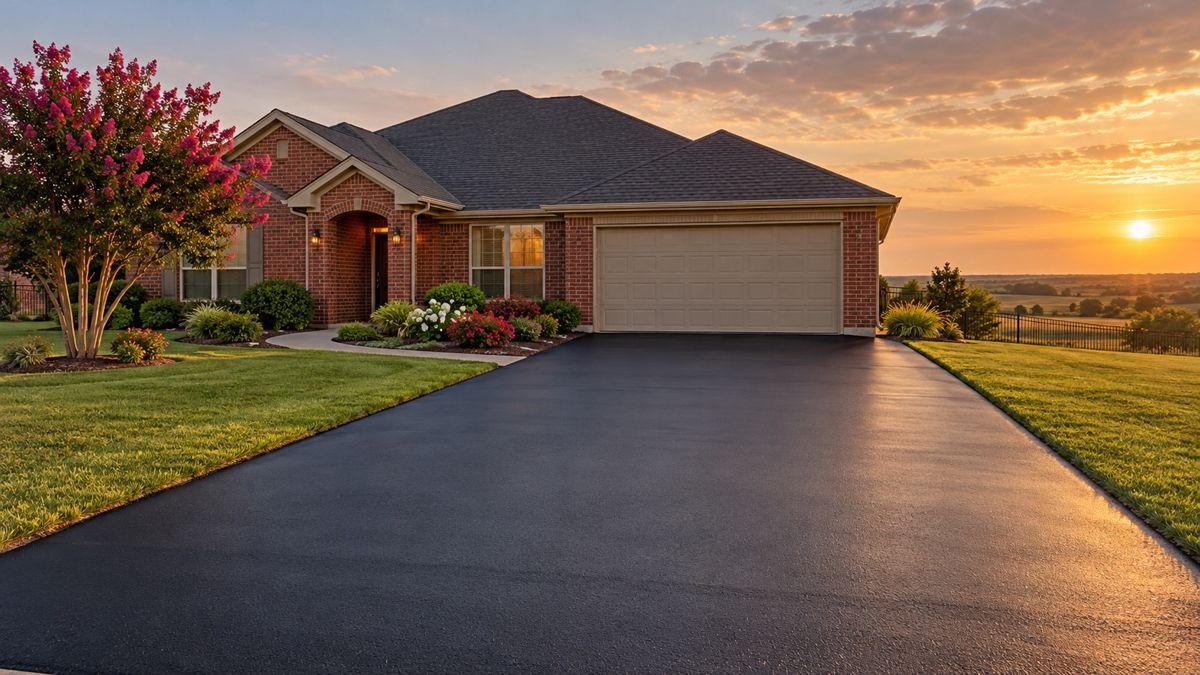
Most asphalt driveways in Oklahoma City should be sealcoated about every two to three years. A driveway in full sun with heavy use may need it a little sooner. A lightly used driveway with some shade can often wait a bit longer. The first seal should wait until the asphalt has cured for several months. The rest of this guide explains why, and how to tell when your driveway is due.
How often should you sealcoat in Oklahoma City?
The two to three year range is a widely used guide, not a rule written in stone. Your own driveway may sit at either end of it, or outside it. Several things move the number.
- Sun exposure. A driveway that gets full sun all day dries out faster than one shaded by trees or a house.
- Traffic. Daily commuting, a work truck or a boat trailer wears the surface faster than one car on weekends.
- Age and condition. Older pavement with a dry, open texture soaks up water and needs protection sooner.
- Drainage. A driveway where water sits will break down faster whatever you put on it.
If you are not sure, look at the surface in spring and again in fall. Gray, dry pavement with a rough texture is asking for help. Dark, smooth pavement that sheds water can usually wait another year.
When should you seal a brand new driveway?
Not right away. Fresh asphalt still holds oils that need to work out of the surface, and the mix keeps hardening for months. Sealing too soon can trap that softness and leave a surface that scuffs and tracks.
A common rule is to wait six months to a year after paving. In Oklahoma City, that often means a driveway laid in spring is ready to seal the following spring or fall. Driveways paved late in the year usually wait for the next warm season. Your paving contractor should tell you when yours is ready, based on when it was laid and the weather since. If you are planning a new driveway, our driveway paving page explains the process from start to finish.
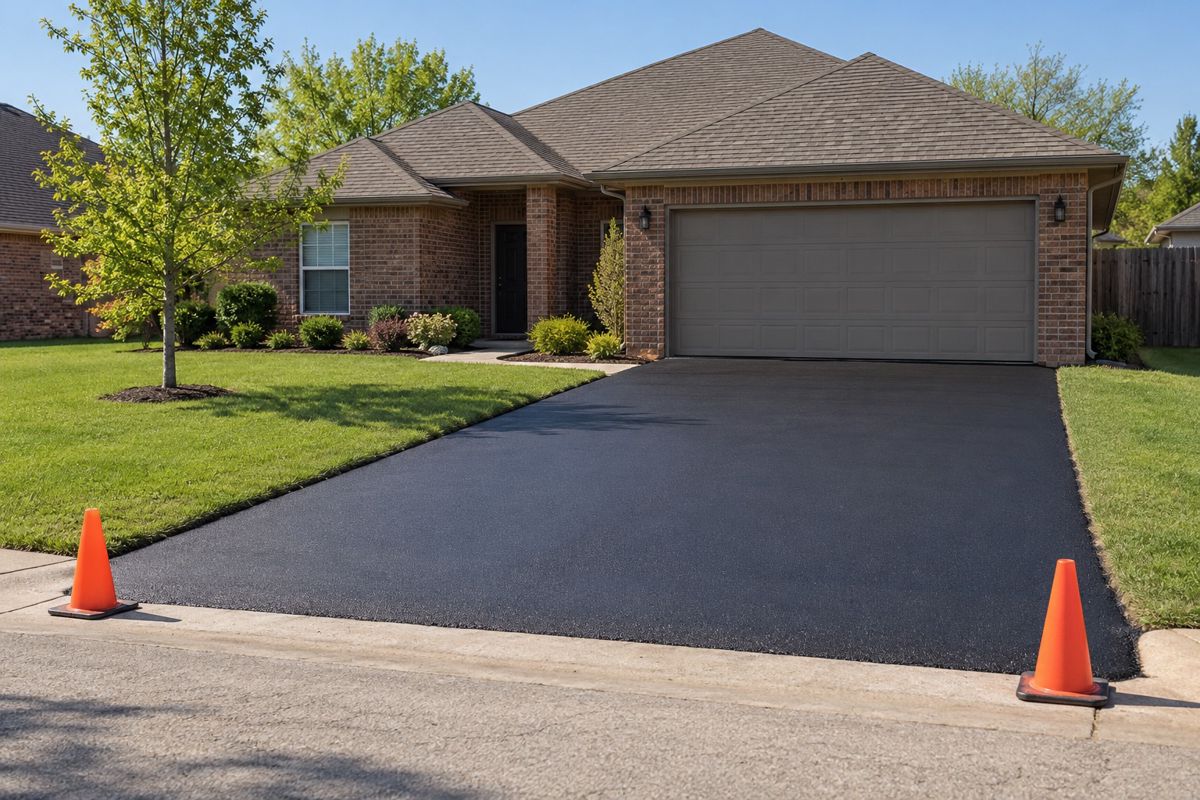
What does the Oklahoma City climate do to asphalt?
Oklahoma City is a tough place for pavement, and the cause is a mix of things rather than one.
Sun and heat
Long, hot summers bake the binder in asphalt. Over time the surface goes from black to gray, turns brittle and starts to lose small stones.
Freeze and thaw
Winters here swing above and below freezing many times. Any water in a crack freezes, expands and widens it. Ice storms add to the load.
Storms and hail
Heavy spring rain and hail season put water on the driveway fast. If cracks are open, that water goes straight to the base.
Red clay soil
Much of central Oklahoma sits on clay that swells when wet and shrinks when dry. That movement cracks pavement from below. Sealcoat cannot stop it, but it can protect the surface from water that follows the cracks.
How do you know it is time to seal?
You do not need special tools. Walk the driveway and check for these signs.
- The color has faded from black to gray.
- Hairline cracks are showing up across the surface.
- Small stones are loose and collect at the edges.
- Oil and fuel stains are spreading.
- Water soaks in rather than beading on the surface. Try pouring a little water on a dry day and watch what it does.
If you see two or three of these, it is probably time to talk to a contractor. If you see wide cracks, sunken areas or crumbling edges, sealcoat alone will not be enough, and the next section explains why.
What is the right weather and process for sealcoating?
Sealcoat needs dry pavement and mild weather. Air temperatures should be above about 50 degrees and rising, with no rain in the forecast for at least 24 hours. In Oklahoma City, that usually points to spring and fall. In midsummer the pavement can get hot enough to cause uneven coating, and in winter the product will not cure.
A proper job follows an order.
- Sweep and blow off dirt, leaves and loose material.
- Clean oil and fuel spots and prime them so the coating can bond.
- Fill cracks with a flexible filler and let it set.
- Apply the sealcoat evenly with squeegees or a sprayer.
- Block off the driveway while it dries.
Plan to keep cars off for at least 24 to 48 hours, and longer in cool or damp weather. Keep sprinklers off, since water can wash fresh coating. Walking on it early leaves marks.
When is sealcoating not enough?
Sealcoat is a thin layer. It protects pavement that is still healthy, but it cannot hold up a base that has failed. Before you spend money on a coating, check for these problems.
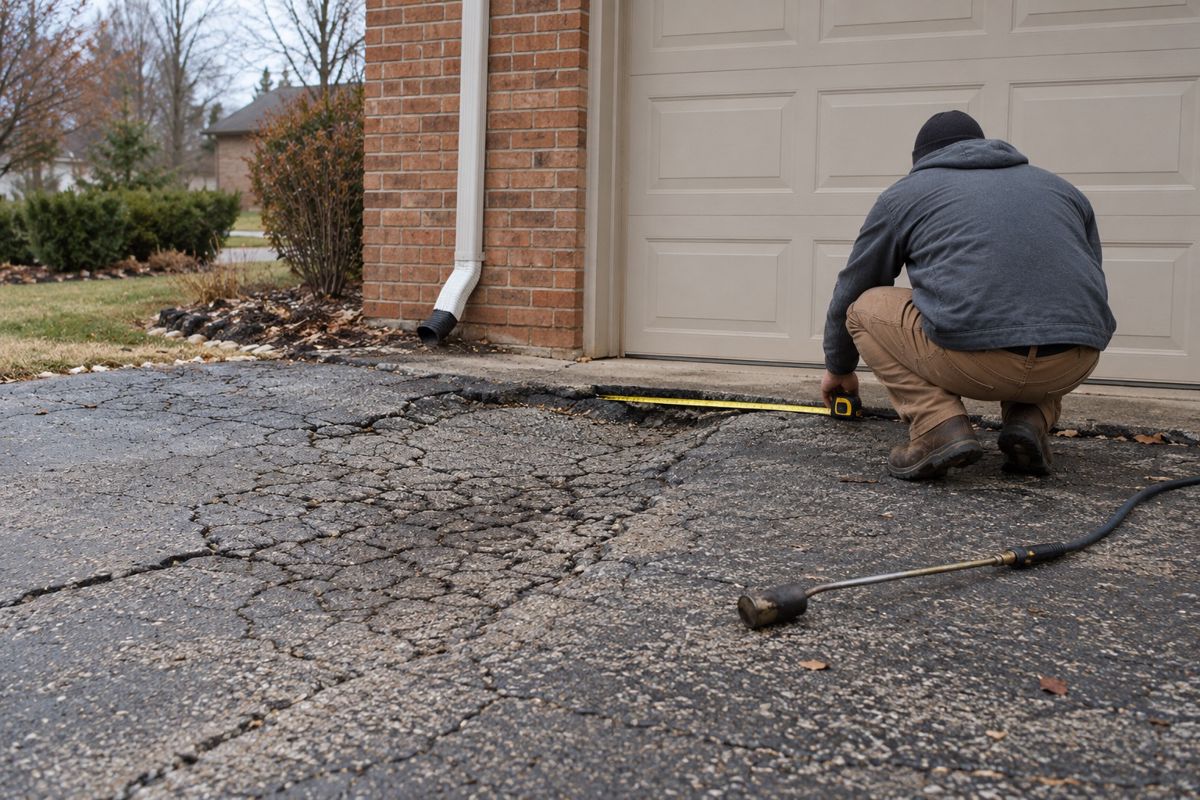
- Alligator cracking. Cracks that join to form a pattern like reptile skin mean the base is giving way.
- Deep ruts or sunken areas. These hold water and keep damaging the pavement.
- Potholes. They need to be cut out and rebuilt before anything else.
- Heaved sections. Clay movement or tree roots can push the surface up.
For isolated damage, a proper patch usually does the job. Our pothole repair and patching page explains how that is done. If most of the driveway looks like this, replacement may be the better choice, and it is worth asking for both options in writing.
What should you do next?
Walk the driveway this weekend and look at the color, the cracks and the way water behaves. If the pavement is sound but dry and gray, a fresh seal with crack filling is the right next step. Our sealcoating and crack filling page explains how we handle it, from cleaning to cure time. We will look at your driveway and tell you honestly whether it needs a seal, a patch or a replacement, and we put the answer in a written quote.